Let's Talk About Prosperity
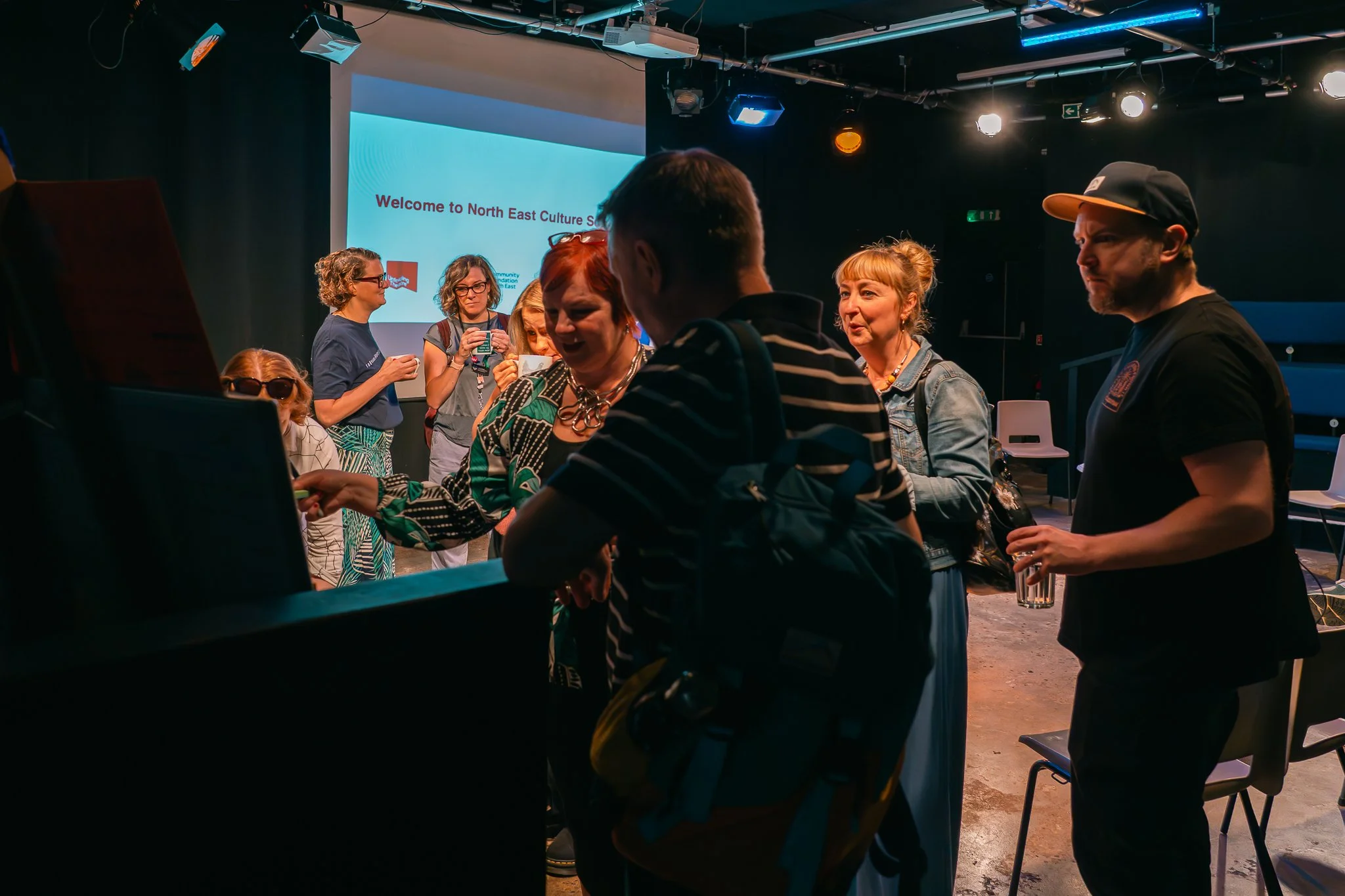
Image credit - Von Fox Promotions
Unfolding Theatre Company Producer Midge Ryall reflects on the recent Newcastle Culture Partnership event, held at Northern Stage.
The sun was shining on an unseasonably warm Friday afternoon in October. It was time to gather for another packed-out Newcastle Culture Partnership event. This one, held at Northern Stage, was generously co-hosted with Newcastle City Council, Newcastle Gateshead Cultural Venues and North East Cultural Freelancers.
The theme was ‘prosperity’. How can we work together better to build prosperity in the city’s cultural sector? And what does prosperity mean for the cultural workforce?
Unfolding Theatre’s Artistic Director, Annie Rigby welcomed everyone to the event on an equal footing. She acknowledged how prosperity can be tricky to think about in these times of precarity. Annie encouraged attendees to approach conversations with generosity, openness, and an understanding that we experience the challenges of the current climate differently.
Sam Brimer and Leila D’Aronville talked about the role North East Cultural Freelancers plays, providing opportunities for freelancers to meet, build networks of peers, offer mutual support and have their voices heard. This advocacy component is especially relevant given Leila’s recent appointment as one of two Government Freelance Champions. This is bringing NECF’s work to a national policy stage.
Oladapo Nuga, founder of Innit Studios asked for definitions of prosperity - what it means to us. Daps suggested that prosperity has three components: having space to have an idea, the ability to execute it, and then making that idea commercially viable. He also asked how we can create opportunities that make more people want to build lives here?
Amy Fawdington, Deputy Executive Director at Northern Stage shared honest insights about how financial precarity is affecting venues, the way they operate, the impact on programmes as well as their hopes for the future.
The conversation then opened out into breakout discussions:
How can we work together to build prosperity for Newcastle’s cultural sector?
How can we ensure all work in the cultural sector is good work – accessible, inclusive, appropriately paid, supported?
What training or professional development do we need to thrive? Where might we find it?
What spaces do we need to grow creative practice and sustainability of cultural sector?
And, the all-important question – Anything else?
A compelling theme from these discussions was how we define prosperity in the first place. Does prosperity mean growth, profitability and an ever-increasing scale of activity? Or could it mean something different for different people? A student attendee suggested that prosperity could mean contentedness: knowing that your practice is sustainable, you are paid fairly for your work, and that you are delivering a level of activity that works for you. In a world where we are constantly being encouraged to consume and produce more, it felt useful to ask whether we might need to imagine different models of prosperity.
Ireland's Basic Income for the Arts model was discussed across breakout groups. The pilot is demonstrating the potential of providing artists with a more secure foundation. People asked whether Newcastle Culture Partnership could play a role in advocating for a similar scheme here? It feels like an ambitious question, but perhaps these are precisely the questions that cultural partnerships are well placed to explore.
There were some practical suggestions for collaborative action – building on Northern Stage’s Spare Room scheme, looking at how space in cultural venues across the city could be made accessible to creatives; skills sharing and mentoring; more open conversations about money and working together to advocate for more investment and funding.
The conversations brought me back to a question that seemed to sit underneath the whole afternoon: what would it take to build a cultural sector in which people can thrive and build sustainable creative lives?
The second round of breakout conversations explored the next steps for Newcastle Culture Partnership:
Governance & structure - how can the partnership remains nimble, while also being representative and accountable?
Events – what might future events look like and how can they include the widest range of voices?
Pilot projects - a £5k pot is available for a pilot collaborative project, taking action on a theme that has come out of events. How might it be structured / evaluated / delivered?
There were a whole range of practical suggestions and thoughtful questions. This included: enabling ‘doers’ by trusting those taking actions forward; the role of co-hosts in delivering next steps from an event; ensuring freelancers are financially supported to contribute to a steering group (including prep time) – but alongside this, also valuing the power of volunteering; taking time to share learning and evaluate impact together; thinking about how we support those attending for the first time; keeping it fun!
There were also conversations about ownership. How is Newcastle Culture Partnership held by all of us? And how do we ensure people feel active ownership (rather than thinking the strategy and actions belong to someone else)? The costs of the current programme are supported by a budget from Newcastle City Council plus some in-kind contributions from event hosts. How might we build on that?
We’ll be sharing news soon about the next events in early 2027 – themed around Opportunity (co-hosted with GLOW Newcastle) and Climate (co-hosted with Threads in the Ground). We’ll also be sharing news about other ways to get involved with the next steps of Newcastle Culture Partnership. If you’d like to get in touch about any of this, just drop us a line.