Every Part of the Ecosystem Counts: Reflections on the North East MSA Culture Consultation
What does a strategic framework for culture actually need to get right? At Newcastle Culture Partnership's recent consultation event on the North East Mayoral Strategic Authority's draft framework for Culture, Creative Industries and Sport, one freelancer found a room full of people asking exactly that - and meaning it.
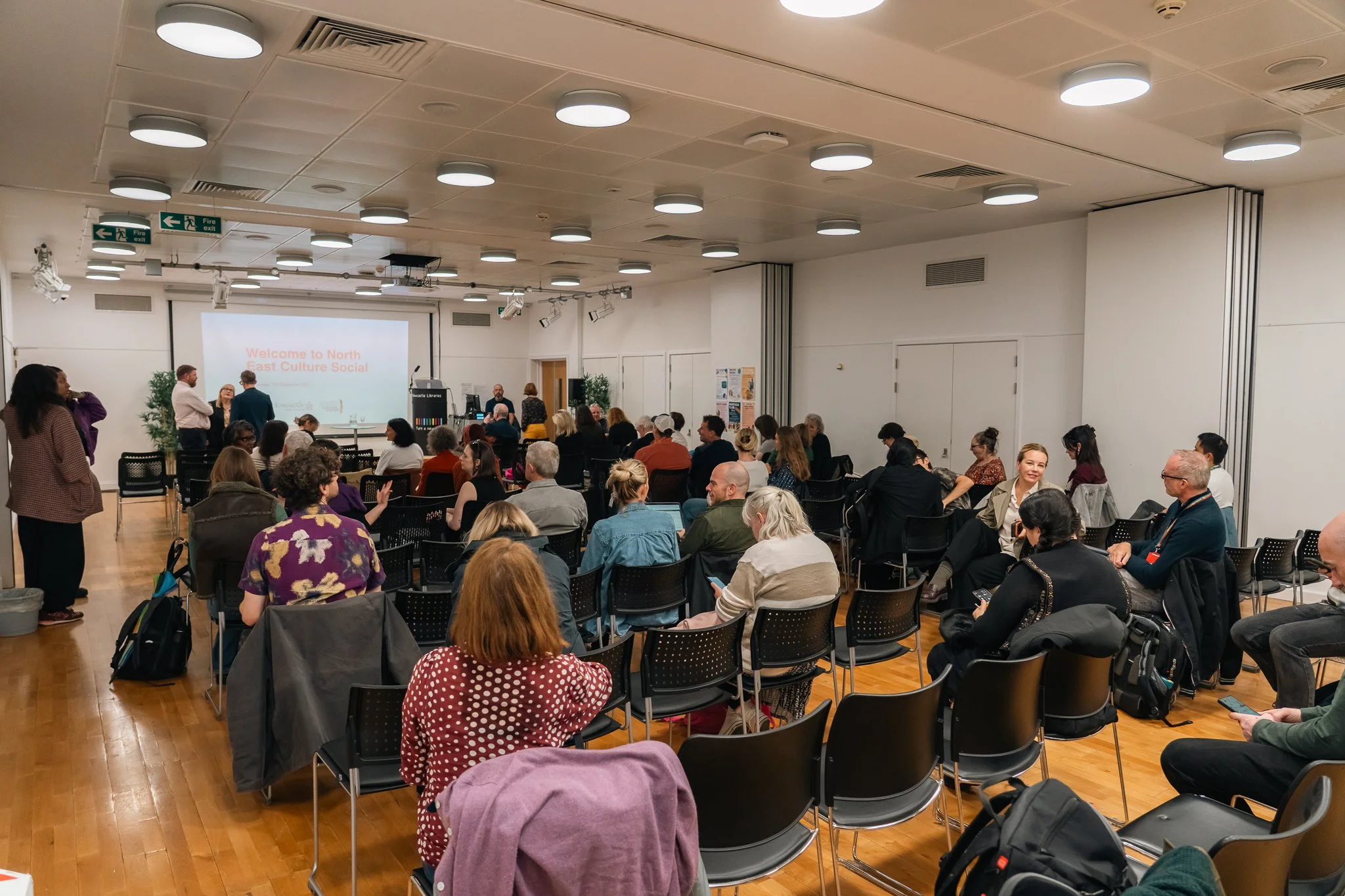
Image credit: Von Fox Promotions
For more than twenty years I've walked into rooms like this one wearing a particular kind of badge: the lanyard of a large cultural organisation, with all the certainty (and the weight) that comes with representing somewhere. Last week I walked into the Newcastle Culture Partnership event with no lanyard at all. Just me, newly self-employed, sitting in the room as a freelancer for the first time. I wasn't entirely sure what to expect. What I found was one of the most quietly energising afternoons I've had in a long time.
The session had been pulled together to feed into the North East Mayoral Strategic Authority's draft framework for Culture, Creative Industries and Sport. That consultation is open until 17 June, with the final strategy due to arrive late in the summer. On paper, "contributing to a draft strategic framework" sounds like the sort of thing where you sit, nod politely, and fill in a form on the way out. In practice it was warm, generous, and genuinely useful: the kind of conversation that actually goes somewhere.
Annie Rigby, Unfolding Theatre's Artistic Director and CEO, set the tone beautifully right at the start, inviting everyone to have a proper look around the room and welcoming people "on an equal footing." Big company or small. Freelancer or organisational leader. Junior member of staff, artist, youth worker, or someone holding a community centre together. If you were sitting there wondering whether you really belonged, the answer was a firm yes. You were exactly the right person to be here. As someone freshly out on their own, I'll be honest: that was really reassuring. There's a particular vulnerability to turning up somewhere for the first time without an institution behind you, and that small act of welcome did a lot.
The format helped too. No top table, no death-by-PowerPoint. Big sheets of paper with prompts, a couple of rounds of table conversation, and an open invitation to wander off mid-discussion if a different table was calling you. (There was even an "anything else" sheet for the things that don't fit neatly into anyone's framework - my kind of thinking.) Mark Adamson and Sarah Hughes from the Mayoral Strategic Authority were refreshingly clear that they weren't there to talk at us; the draft is genuinely a draft, and the whole point was to make it more resonant before it's published.
And then the conversations themselves, which is where it really came alive.
Some of the themes were ones the sector has been circling for a while, but they felt sharper said out loud, in a room, by people living them. The precarity of freelance livelihoods. The simple, stark truth that if you don't invest in the artist, the artist disappears, and then leaves the region for somewhere that will. The broken pipeline that starts long before anyone reaches a "career": a forty per cent drop in children taking art subjects at school, and a real disconnect between formal education and any meaningful route into the sector. We talked about the missing stepping stones for people who don't arrive by the tidy, supported path, and about how leadership and mid-career development too often get forgotten in the rush to fund the very young or the very established. AI and digital saturation came up, of course: the worry that the cultural sector is sleepwalking into it, but also a real appetite to meet it with curiosity rather than fear, and perhaps to learn a thing or two from the tech and gaming companies on our own doorstep.
But the thread that ran through everything, and the thing I keep coming back to, was ecosystem.
It's an easy word to nod along to and a hard one to actually mean. What made this session different was that people meant it. There's an honest tension in a strategy built around economic growth: museums, as someone put it, are about the least "productive" thing in the room when you measure them on a spreadsheet. Theatre, dance, galleries, the visual arts, studio spaces. None of them top the economic-growth charts that the high-growth sectors of games, music and screen do. And yet, as Keith Merrin, Director of North East Museums, pointed out so well, nobody simply turns up as a games designer. The screen industry, the music economy, the headline growth figures: none of it appears out of nowhere. It grows out of a whole living ecology: the school art class, the community workshop, the small touring company, the museum that sparked something in a child, the freelancer who makes three other people's projects possible.
What I found genuinely moving was hearing that idea defended by the people you might expect to be competing for the same pot of money. The point that culture can't be siloed felt like the most grown-up thing said all afternoon: that it lives inside housing, transport, health and education, and that the question isn't "how much money is getting to the institutions" but "how do we all contribute to the bigger picture". Everyone in that room had a role, and the framework's job, if it gets this right, is to recognise every one of those roles rather than ranking them.
That's also where I found my own footing. For two decades I'd have walked into that conversation as an institution, naturally arguing the institution's corner. Sitting there as a freelancer, I could suddenly see the whole web a little more clearly, and see that the freelancer is a thread in it, not a frayed edge. We're part of how an artist's pathway actually plays out across the sector. Recognising that, out loud, in a room that genuinely believed it, was the best possible introduction to this next chapter of my working life.
So, thank you to Newcastle Culture Partnership, to Annie and Unfolding Theatre, and to everyone who brought such honesty and energy to a not-especially-easy moment for the sector. The consultation is still open until 17 June, and the strategy will be all the better for more voices in it. If you've got something to add, add it. Every part of the ecosystem counts, including yours.
And yes, I noticed how few of the biscuits got opened. We'll do better next time!
Adam Goldwater
Adam runs ASG Goldwater Consulting, a solo practice working across museums, galleries, heritage sites, arts organisations, schools and children's wellbeing organisations in the North East. Drawing on more than twenty years and several senior roles inside large cultural organisations, he now works freelance on creative strategic planning, evaluation and inclusive, and object-based learning.