Breaking the Budgeting Taboo: Tell Me How You Manage Your Finances
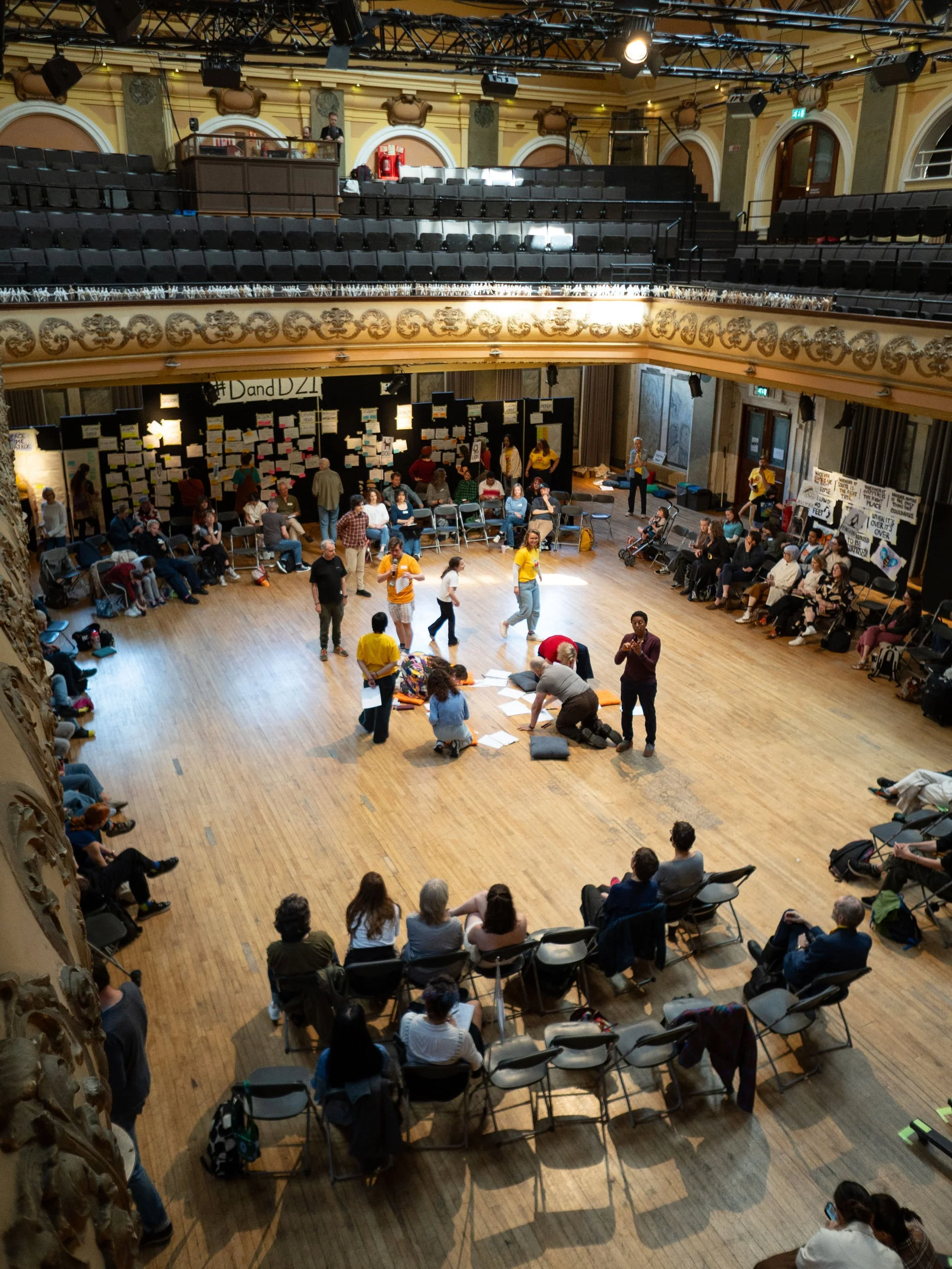
Credit - Jeremy Ang
At this year’s Devoted & Disgruntled, Company Producer Midge Ryall called a session titled Breaking the Budgeting Taboo: Tell Me How You Manage Your Finances.
D&D uses Open Space Technology, meaning participants co-create the programme based around whatever feels urgent or alive for them in that moment. It encourages participants to answer the question: what are we going to do about theatre and the performing arts? The result is that people often end up reflecting on the things that are sitting underneath the surface.
I arrived exhausted after an intense stretch of delivery at work - several months of back-to-back projects (we all know what that feels like!). I worried that my brain would still be in survival mode and unable to focus on the bigger picture. But D&D has a strange way of softening you back into yourself. Once I settled into the space, it became obvious what I actually wanted to talk about.
Money. Not just organisational finances, but my relationship to financial responsibility itself.
I’ve been in my current role for nearly two years now, and I’m slowly developing a clearer understanding of how budgeting and organisational strategy actually work in practice. I’ve now lived through a full financial year with the company, which changes things. You start to recognise patterns. You begin understanding cashflow cycles, pinch points, and the difference between a genuine crisis and the ordinary uncertainty of working in the arts.
But I also realised, during the session, how much of my approach has been driven by fear. Fear of getting it wrong. Fear of not bringing enough money in. Fear of accidentally steering us into a deficit. I’ve been holding onto the purse strings with such force, squirrelling money away wherever possible, and trying to create safety through caution.
And to some extent, that’s probably the sign of being a good producer! The arts sector is precarious. Financial vigilance matters. But I’ve been trying recently, both at work and in life generally, to notice when fear becomes the main thing motivating me: I don’t want anxiety to masquerade as strategy forever.
Part of this comes from the fact that I didn’t come from a finance background. Like a lot of people working in theatre, I learned by doing. Another part might be neurodivergence: numbers still carry an emotional weight for me. I grew up terrified of maths lessons, crying over my homework, and convinced that numerical mistakes equalled personal failure. Even now, spreadsheets can trigger the same sense of panic and inadequacy I felt as a child.
So it feels important to pause and look at the evidence instead of just the feeling.
For two years running, the company has made a small surplus. What this tells me is that my instincts aren’t entirely wrong, that the caution has worked, and the data backs it up. Which means we might now be in a position to experiment with being a little bolder.
Maybe we can plan more ambitious projects, knowing we also know how to pull things back when necessary. Maybe we can think more strategically about where caution is genuinely needed, versus where fear has become habit.
And maybe (just maybe), I can start loosening my grip on some of the imposter syndrome too.